Wifredo Lam: A New New World
An Artist Beyond Borders: Prints That Changed Modernism
EXHIBITION DETAILS:
Opening: August 30, 2026
On View: December 27, 2026Opening Hours l 10 AM – 7 PM, Closed on Monday
Admission fee: ₩6,000
19 Dwitgol 2 Ro, Gwacheon, Gyeonggi, Korea
+82 2 502 8116
K&L MUSEUM is pleased to announce Wifredo Lam: A New New World, the first major exhibition in Korea dedicated to the celebrated Cuban modernist Wifredo Lam. Opening on August 30, 2026, the upcoming exhibition will present a rich selection of the artist’s prints — developed in close collaboration with the Wifredo Lam Estate — oUering Korean audiences a rare opportunity to encounter a body of work shaped by the intersections of diaspora, decolonization, and cultural hybridity.
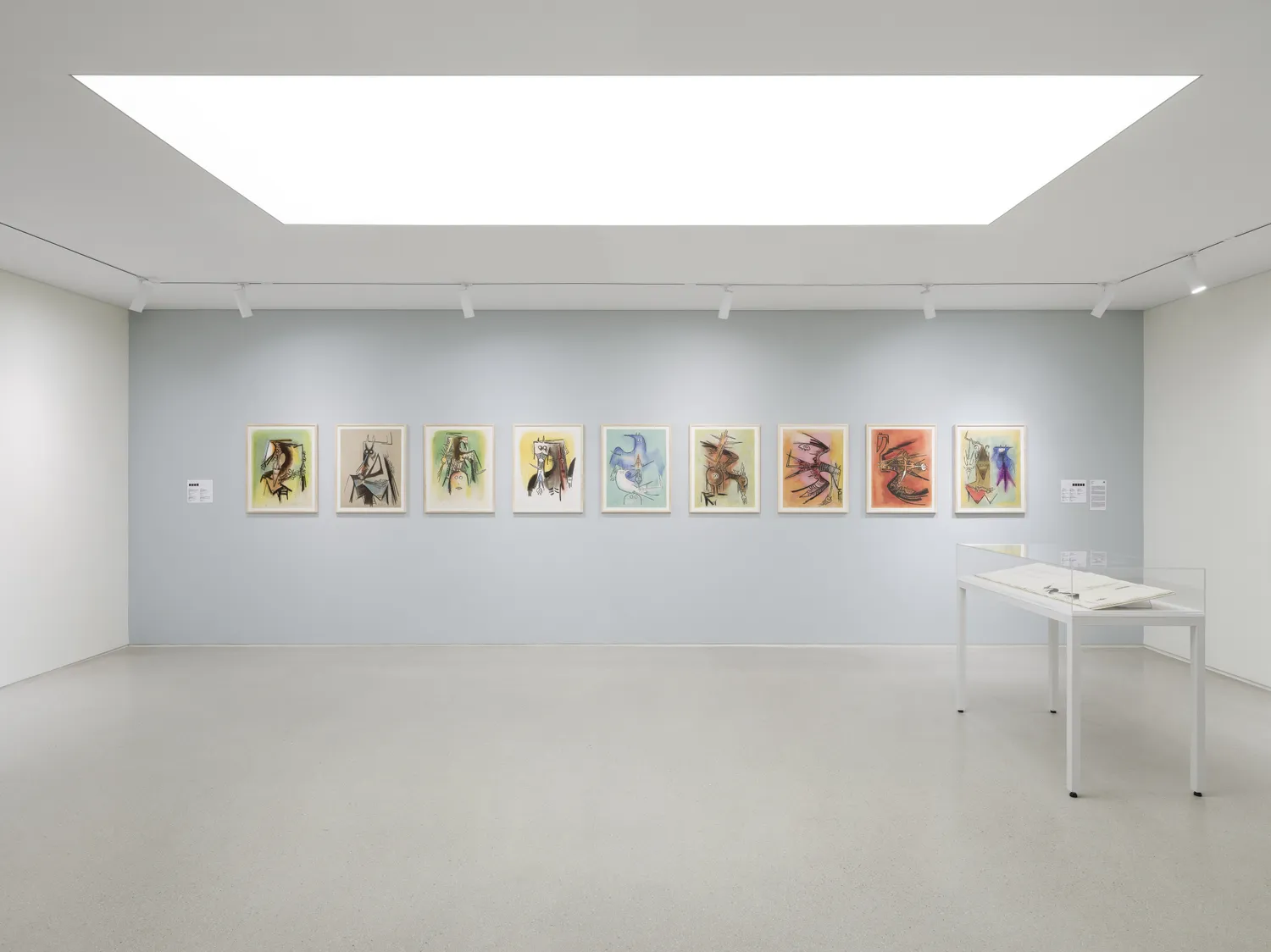
Born in Sagua la Grande, Cuba, to a Chinese father from Guangdong Province and a mother of mixed African and Spanish ancestry, and introduced through his godmother to the spiritual traditions of Afro-Cuban Santería, Lam drew on these intertwined cultural lineages to forge one of the most distinctive visual languages of twentieth-century modernism. At twenty-one, he moved to Madrid to study academic painting, later fighting on the Republican side in the Spanish Civil War before fleeing to Paris in 1938, where he became closely associated with Pablo Picasso, André Breton, Henri Matisse, Joan Miró, and Georges Braque, emerging as a key voice within the Surrealist movement. Following the Nazi occupation of Paris, Lam took refuge in Marseille before returning to Cuba in 1941, a homecoming that marked the decisive turning point in his career. There, his rediscovery of the Caribbean landscape and Afro-Cuban culture culminated in La Jungla (The Jungle, 1942–43), acquired by the Museum of Modern Art (MoMA) in 1945 and now regarded as one of the defining masterpieces of twentieth-century modern art. Wifredo Lam, Apostrophe Apocalypse Plate VII, 1966, Etching, 310 x 195 mm.
Lam is increasingly recognized not simply as a Cuban painter influenced by Cubism and Surrealism, but as an artist who fundamentally reshaped the narrative of Western modernism itself. Introducing Lam’s recent retrospective, MoMA Chief Curator Christophe Cherix observed that Lam’s commitment to making his paintings “an act of decolonization” permanently transformed modern art, insisting that diasporic cultures belonged not at the margins of modernism but at its very center. From November 2025 through April 2026, MoMA presented the landmark retrospective Wifredo Lam: When I Don’t Sleep, I Dream, bringing together more than 130 works spanning nearly six decades of the artist’s career. Asia Society presented Wifredo Lam: Homecoming in Hong Kong in 2024, renewing critical attention to Lam’s work in Asia, following the major retrospective first organized by Centre Pompidou in 2015 that subsequently traveled to Museo Nacional Centro de Arte Reina Sofía and Tate Modern in 2016.
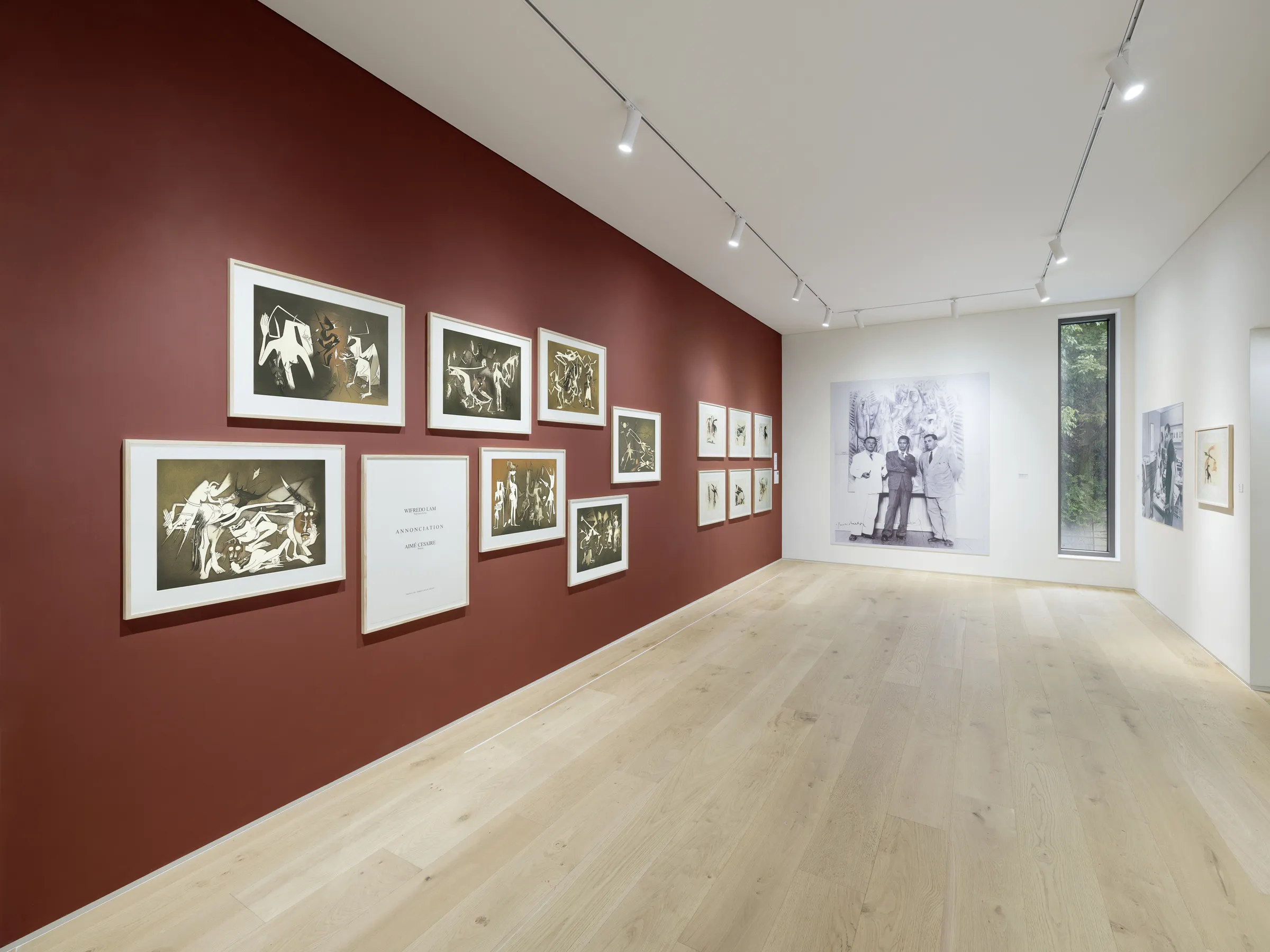
Wifredo Lam lived and worked through one of the most turbulent periods of the twentieth century — two World Wars, the Spanish Civil War, anti-colonial liberation movements, the Cold War, and the Cuban Revolution — all of which became deeply intertwined with the development of his artistic vision. While in exile in Marseille, Lam produced illustrations for Fata Morgana (1941), a collection of poems by André Breton, marking the starting point of the printmaking practice that would come to define his later career. His encounter with Picasso proved pivotal in deepening his engagement with his own African heritage, while his friendship with the Martinican poet Aimé Césaire developed into an enduring intellectual partnership connecting artistic practice with anti-colonial thought. In later years, Lam collaborated with writers including Ghérasim Luca, René Char, Alain JouUroy, and Gabriel García Márquez, producing some of the most significant achievements of his later printmaking.
Hybridity remains one of the defining concepts of Lam’s practice. His compositions are populated by beings in which human, animal, plant, and spiritual forms coexist without clear boundaries — visualizing the continuous transformation of cultures, memories, and identities as they merge into new forms of existence. Lam once described his work as “a kind of Trojan Horse that would disturb the dreams of the exploiters,” and his imagery functioned as a visual strategy for challenging colonialism, racial hierarchies, and Western-centered ways of seeing the world. Born in Cuba and shaped by experiences across Spain, France, and beyond, Lam carried within him the cultural legacies of Europe, the Caribbean, Africa, and Asia — a plurality that, long before diaspora and cultural hybridity became central to global artistic discourse, placed questions of borders, identity, and belonging at the heart of his practice.
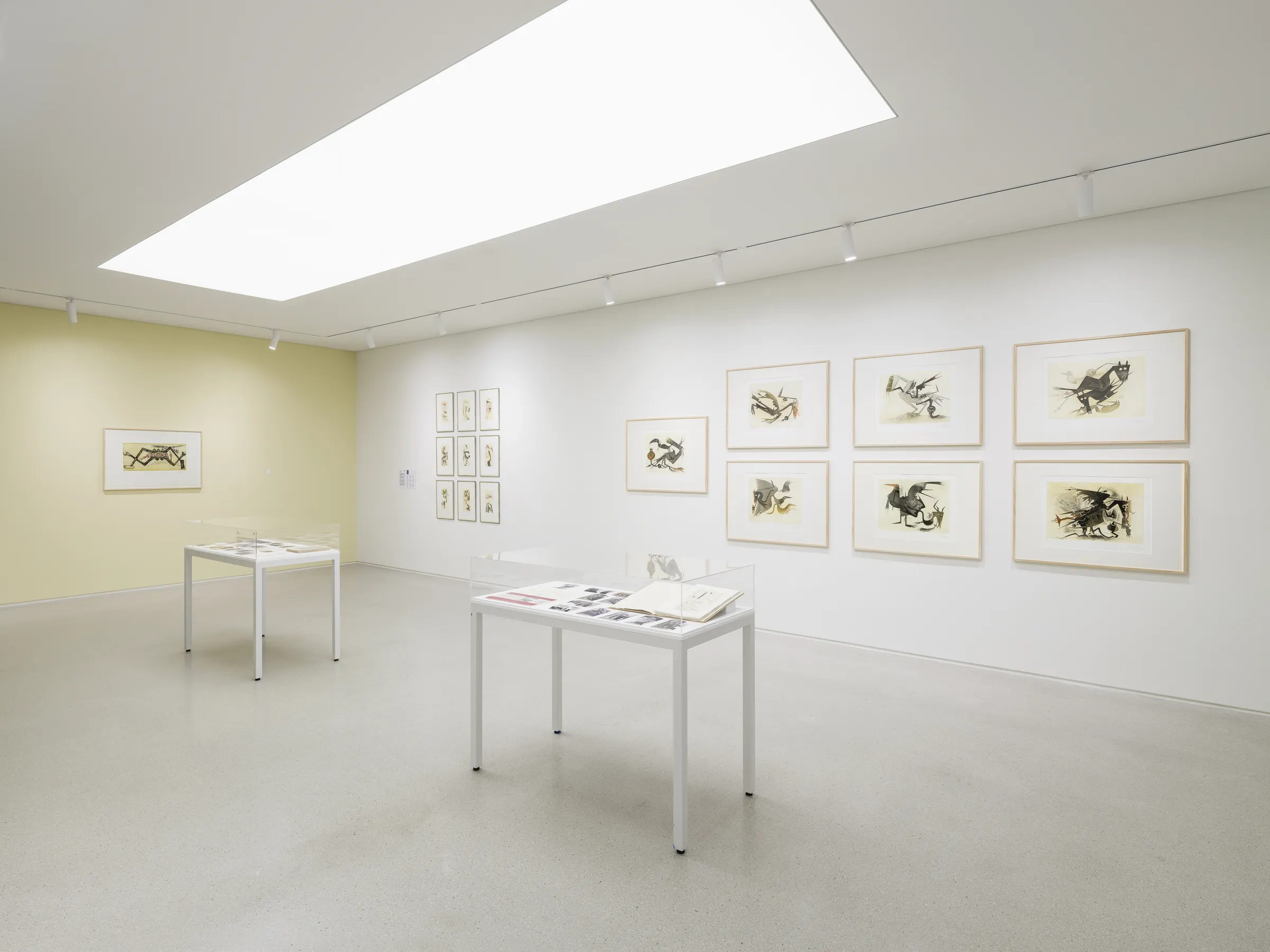
Wifredo Lam: A New New World places particular focus on Lam’s prints, a body of work equal in importance to his paintings yet revealing a distinct dimension of his artistic vision. Working across etching, aquatint, and lithography, Lam developed with remarkable precision the hybrid figures that define his art. A decisive chapter in his later career was his nearly two-decade collaboration with the Italian master printer Giorgio Upiglio, from 1963 until Lam’s death in 1982, producing print series at Upiglio’s renowned Milan workshop that are widely regarded as among the most compelling expressions of the themes that occupied Lam throughout his life. Printmaking also oUered Lam a space where literature and visual art could enter into dialogue: portfolios such as Apostroph’Apocalypse (1966), Contre une maison sèche (1976), Annonciation (1982), L’Antichambre de la Nature (1966), El Último viaje del buque fantasma (1976), and Lames de Lam (1977) emerged as collaborative works in which poetry and imagery coexist as equal partners. For this reason, Lam’s prints should not be understood as secondary to his paintings, but as an autonomous body of work representing some of the most concentrated expressions of his political consciousness and diasporic imagination — an understanding that was also at the heart of Wifredo Lam: Outside In, presented by STPI – Creative Workshop & Gallery in 2025.
The exhibition challenges art historical narratives long shaped by the Western canon, inviting Korean audiences — whose art education and exhibition practices continue to rely heavily on modernist histories centered on Western Europe and the United States — to reconsider how the boundaries of “canonical modernism” have been constructed, and whose voices have historically been excluded. It also highlights the artistic significance of diaspora and multicultural identity at a moment when contemporary Korean society is increasingly shaped by migration, multicultural families, and diverse diasporic communities, oUering a meaningful point of reference for reflecting on questions of identity and belonging today. Further, the exhibition oUers an opportunity to rethink the artistic potential of printmaking: while Korea holds a rich printmaking tradition rooted in East Asian woodblock practices, the dialogue between these traditions and twentieth-century Western printmaking remains relativelyunderexplored, and Lam’s etchings, lithographs, and aquatints demonstrate that the medium is far more than a means of reproduction. Developed in close collaboration with Lam’s family and estate, the exhibition strengthens K&L MUSEUM’s position within the international dialogue on modern and contemporary art, oUering Korean audiences a rare opportunity to engage with one of the twentieth century’s most important artistic voices.
Lam’s close friend, the Martinican philosopher and writer Édouard Glissant, proposed the concept of the Poetics of Relation — a philosophy grounded in the rejection of fixed identities and the acceptance of opacity, interconnectedness, and continual transformation — few ideas oUer a more illuminating framework for understanding Lam’s art. Throughout his life, Lam resisted being confined to any single culture, artistic tradition, or national identity, and printmaking became the medium through which these ideas found one of their most concentrated and collaborative forms. Building on the momentum of recent global exhibitions — culminating in Wifredo Lam: Homecoming at Asia Society Hong Kong (2024), Wifredo Lam: Outside In at STPI Singapore (2025), and the landmark retrospective Wifredo Lam: When I Don’t Sleep, I Dream at MoMA, New York — K&L MUSEUM’s presentation of Korea’s first major exhibition dedicated to Lam’s prints represents an important milestone, inviting visitors to encounter an artist who, though long positioned outside the traditional centers of modernism, profoundly transformed them from within.
This exhibition has been organized by K&L MUSEUM and developed in close collaboration with the Wifredo Lam Estate. ⓒ
About the artist
Wifredo Lam (1902–1982, b. Sagua la Grande, Cuba) was one of the most singular and multifaceted artists in the history of twentieth-century modernism. Formed at the intersection of Chinese, African, and Spanish heritage and Afro-Cuban Santería, Lam studied in Madrid, fought in the Spanish Civil War, and became closely associated with the Parisian avant-garde before returning to Cuba in 1941. His masterpiece The Jungle (1942–43) is held in the collection of the Museum of Modern Art, New York.
His work has been the subject of major exhibitions worldwide, including the retrospective organized by Centre Pompidou, Paris (2015), which traveled to Museo Nacional Centro de Arte Reina Sofía, Madrid, and Tate Modern, London (2016); Wifredo Lam: Homecoming, Asia Society Hong Kong (2024); Wifredo Lam: Outside In, STPI – Creative Workshop & Gallery, Singapore (2025); and Wifredo Lam: When I Don’t Sleep, I Dream, The Museum of Modern Art, New York (2025–26). Lam’s work has also been presented across Asia since 1991, including exhibitions in Beijing, Shanghai, Hangzhou, Guangzhou, and Hong Kong (1991); the centennial retrospective at the Yokohama Museum of Art (2002); and a traveling exhibition of his prints in Beijing, Guangzhou, and Kunming (2016).
About K&L MUSEUM
K&L MUSEUM is a private art museum located in Gwacheon, South Korea, founded in September 2023 as part of SMK International’s cultural initiative. Enfolded by Gwacheon’s Umyeonsan Mountain, K&L MUSEUM aims to discover contemporary artists active internationally across Korea, Europe, the United States, and Southeast Asia, as well as to introduce seminal modern and contemporary art of art-historical importance.
Since 2023, K&L MUSEUM has presented a series of exhibitions, including the solo exhibition of Austrian avant-garde artist Hermann Nitsch, the solo exhibition of Korean postmodernism pioneer Kwon Young-hyun, and the solo exhibition of Swiss contemporary artist Claudia Comte, Ascending the Ashes: A Tale of Renewal. The museum has also presented Tactics for an Era, a group exhibition dedicated to discovering and spotlighting notable emerging Korean artists. Wifredo Lam: A New New World continues K&L MUSEUM’s international program, further solidifying its position as a leading platform for contemporary art discourse in Korea.